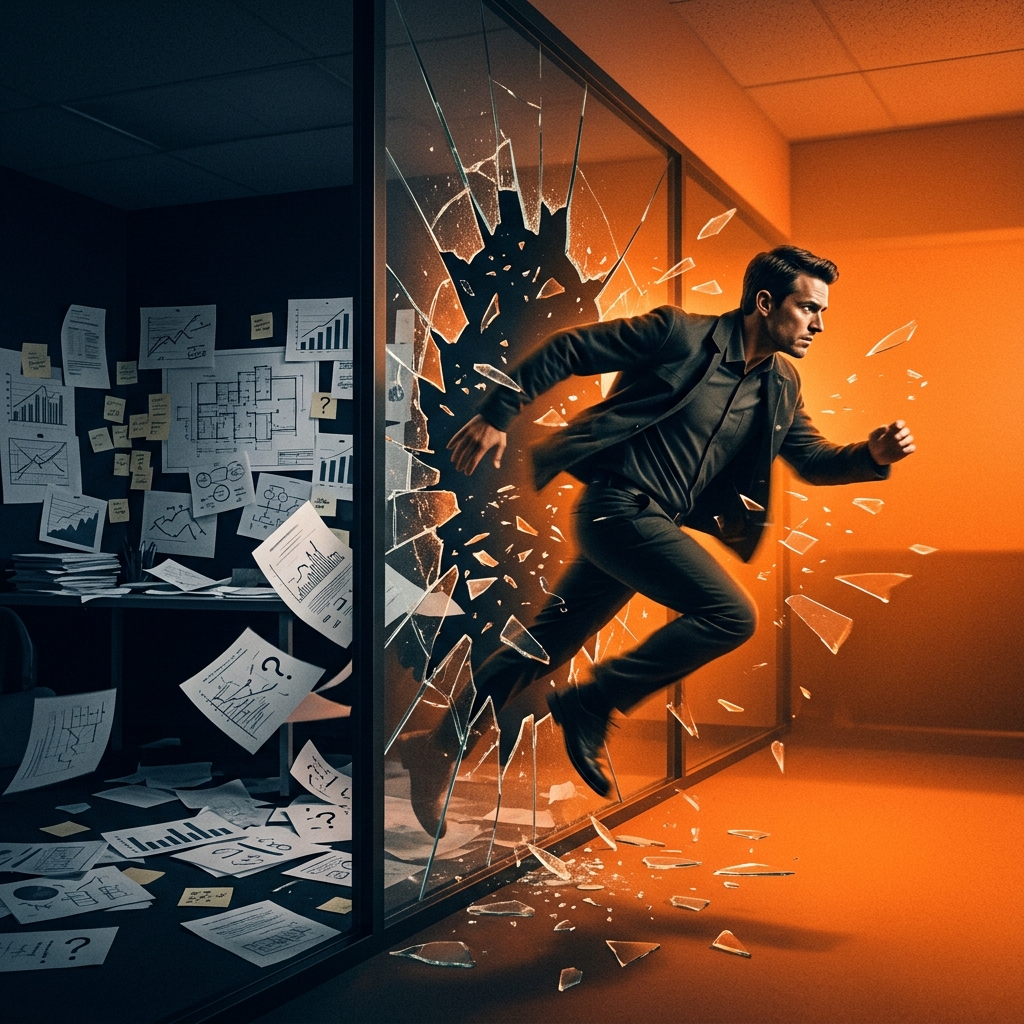

In the Philippines, thousands of people dream of starting a business.
Pero ang totoo? Marami ang hindi naman talaga natatalo sa kakulangan ng pera. Natatalo sila sa kakaisip.
They spend years watching motivational videos, attending seminars, researching trends, and waiting for the "perfect timing." Meanwhile, someone else with less experience, less preparation, and fewer resources starts small — and eventually wins big.
According to Reymond delos Reyes, one of the biggest killers of entrepreneurial dreams is something called analysis paralysis.
The habit of overthinking instead of executing.
Because in business, movement creates clarity. Not the other way around.
The Dangerous Comfort of "Preparation"
Many aspiring entrepreneurs believe they need to know everything before they begin.
"Dapat expert muna ako."
"Kailangan perfect muna ang plan."
"Baka hindi gumana."
But the reality is simple: You will never fully understand business until you experience business.
No amount of YouTube videos can replace actual customer rejection. No motivational quote can replace real-life inventory problems. No business book can perfectly prepare you for the pressure of making payroll, closing sales, or handling difficult clients.
Most successful entrepreneurs learned while already moving.
That's why Boss RDR emphasizes one thing:
Stop waiting to become ready. Start becoming ready while doing the work.
Step 1: Find Something You Can Sell NOW
One of the biggest misconceptions in entrepreneurship is the belief that you need a groundbreaking idea.
You don't. You simply need:
- A product
- A service
- A problem to solve
- And the willingness to sell
According to Boss RDR, your first business does not need to be your "forever business."
It only needs to start building confidence, experience, cash flow, communication skills, and market understanding.
That's why many successful entrepreneurs begin with simple businesses:
- pagkain
- online selling
- printing
- gadgets
- serbisyo
- buy-and-sell
- freelancing
- reselling
The goal is not perfection. The goal is momentum.
Turn Your Interests Into Income
If you enjoy cooking, maybe you start a small food business. If you enjoy talking to people, maybe sales or live selling fits you. If you're creative, maybe content creation, design, or social media services are your entry point.
Your interests matter because business becomes harder when you hate what you do.
But Boss RDR also teaches an important reality: Passion alone is not enough.
The market must want what you offer.
Because business is not about what YOU like. It's about what people are willing to pay for.
The Simplest Business Model: Buy Low, Sell High
For beginners with no technical skills, one of the easiest entry points is still the classic buy-and-sell model. Simple. Practical. Proven.
This model became even more powerful because of platforms like Shopee Philippines, Lazada Philippines, and Facebook Marketplace.
Today, you can research trending products, viral items, customer reviews, pricing gaps, and high-demand categories. Then source products from Divisoria, direct suppliers, wholesalers, manufacturers.
The barrier to entry is now lower than ever. You don't even need a physical store immediately.
Sometimes your first "store" is simply your Facebook account, your TikTok, your Messenger inbox, your personal network.
Sales Is the Lifeblood of Business
One of the strongest lessons repeatedly emphasized by Boss RDR is this:
Without sales, business dies.
Not branding. Not motivation. Not aesthetics. Sales.
A beautiful store without customers is still losing money. A premium logo without conversions is still a liability. A business owner who avoids selling eventually becomes a struggling business owner.
That's why sales mastery is non-negotiable.
Why Many Businesses Fail
Many entrepreneurs focus too much on logos, uniforms, renovations, aesthetics, and expensive equipment — before they even validate demand.
But business survival depends on one thing: Can you consistently generate revenue?
Because cash flow solves problems. Cash flow gives you operational breathing room, hiring power, expansion capability, inventory flexibility, marketing budget, emotional stability.
No sales = constant stress.
The Power of Forced Commitment
One of the most controversial but effective insights shared by Boss RDR is the idea of forced commitment.
Sometimes, people only move when they are forced to move.
That's why some entrepreneurs intentionally buy inventory, reserve a space, commit to production, announce their launch publicly — before they feel ready.
Why? Because pressure creates action.
When you already invested money, your brain shifts from "Maybe I'll try." to "Kailangan gumana 'to."
That urgency changes behavior. You become more resourceful. More aggressive. More focused.
Rejection Is Not Failure — It's Market Feedback
One of the hardest parts of entrepreneurship is rejection. Especially in sales.
People ignore you. Seen-zone ka. Hindi sumisipot sa meeting. Minsan tatawad pa nang sobra.
But according to Boss RDR, rejection is not personal. It is information.
Every rejection teaches pricing issues, positioning problems, weak communication, wrong audience targeting, lack of urgency, unclear value proposition.
The entrepreneurs who improve fastest are usually the ones willing to get rejected the most. Because they gather more real-world data.
The Hidden Science of Business Location
Many entrepreneurs underestimate how powerful location still is. Even in the digital age.
Yes, social media matters. Yes, online selling is massive. But physical positioning still affects visibility, accessibility, buyer psychology, convenience, impulse purchases.
According to Boss RDR, there are major warning signs that your location may be hurting your business.
1. People Pass By — But Nobody Buys
This usually means wrong product-market fit, wrong pricing, weak offer, or poor targeting.
Foot traffic alone is not enough. You need the RIGHT traffic.
A luxury café inside a low-income residential area may struggle even if maraming tao. Why? Because the spending behavior doesn't match.
2. Your Store Is Hard to Access
Convenience is one of the strongest buying triggers. If mahirap parking, hindi visible, walang foot traffic, nakatago ang location — expect lower conversions.
Sometimes businesses fail not because the product is bad — but because customers simply don't want hassle.
3. You're Fighting the Natural Flow of People
One of Boss RDR's practical observations is the "pauwi" strategy. People heading HOME are psychologically different from people rushing TO work.
Pag pauwi: mas relaxed, mas open bumili, mas willing gumastos, mas willing tumigil.
That's why many food stalls, convenience stores, milk tea shops, and service businesses perform better along "going home" routes.
Understanding human movement is part of business intelligence.
Why Malls Continue to Win
Even with e-commerce growth, malls still dominate in the Philippines for one major reason:
People go there already prepared to spend.
That intent matters. A mall is not just a location. It's a buying environment.
The customer mindset inside a mall is different from random street traffic. That's why many brands still aggressively invest in mall presence despite online competition.
Modern Marketing: Stop Selling, Start Solving
Today's consumers are smarter. People hate feeling "sold to." But they love solutions.
A customer buying food is not just buying pagkain. They are buying convenience, comfort, satisfaction, emotional relief, time savings.
A customer buying skincare is not just buying a product. They are buying confidence, validation, transformation, self-esteem.
This is where many businesses fail. They focus too much on FEATURES instead of PROBLEMS.
The Rise of C-Commerce
Boss RDR strongly emphasizes the power of C-Commerce or Conversational Commerce.
Instead of waiting for customers to magically buy, you actively engage them through conversation. This includes Messenger selling, live selling, inquiry handling, lead qualification, follow-up systems.
The goal is not just traffic. The goal is conversion.
A serious buyer usually becomes visible through engagement.
That's why collecting name, contact number, email address — is powerful. It helps separate curious people from serious buyers.
Urgency Creates Sales
One of the biggest reasons customers delay buying is lack of urgency.
"Next time nalang."
"Pag-isipan ko muna."
"Babalikan kita."
Without urgency, most buyers procrastinate.
That's why strong businesses create limited offers, bundles, bonuses, deadlines, free shipping, scarcity, exclusivity.
Not to manipulate people. But to help customers decide faster. Because delayed decisions often become abandoned decisions.
The Real Secret: Give 100%
According to Boss RDR, many people want extraordinary results while giving average effort.
But business exposes your level of commitment.
If inconsistent ka, madaling sumuko, mabilis mawalan ng gana, ayaw ma-reject, puro planning lang — the market eventually notices.
Customers respond to certainty. Customers respond to conviction. Customers respond to energy.
That's why entrepreneurs who fully commit usually outperform those who remain emotionally half-in, half-out.
Beyond Motivation: Execution Wins
Motivation is temporary. Execution builds momentum.
The entrepreneurs who succeed long-term are usually not the smartest. They are simply the most consistent.
They show up daily, improve continuously, adapt quickly, sell aggressively, learn from mistakes, keep moving despite fear.
Because clarity often appears AFTER action. Not before it.
Final Reality Check
If you have been thinking about starting a business for years, maybe this is your wake-up call.
Not every plan will work. Not every product will succeed. Not every launch will explode immediately.
But every year you spend overthinking is a year you lose experience, confidence, relationships, opportunities, market timing.
According to Reymond delos Reyes, the biggest advantage is not talent.
It's action.
Because in entrepreneurship, the people who move eventually learn. And the people who only watch eventually regret.