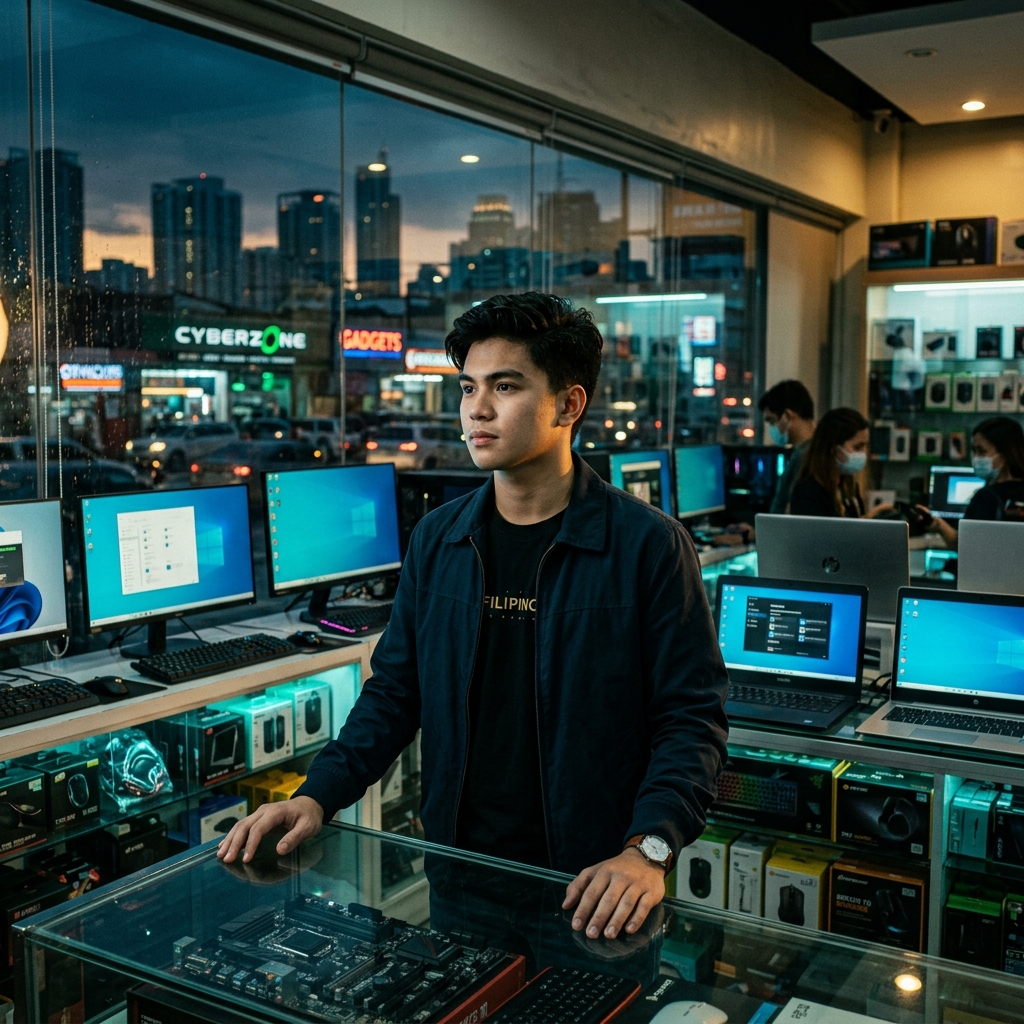
At an age when most teenagers are still figuring out college courses, hobbies, or what they want to become, Kyle Chrysler Molina was already managing inventory, negotiating supplier terms, handling cash flow pressure, and leading a growing company with more than 200 employees.
But what makes his story different is not just the money.
It's the fact that he started with almost nothing.
No millions from investors.
No trust fund.
No giant office.
No perfect setup.
Just timing, pressure, discipline, and diskarte.
Today, UniPC has become one of the fastest-rising tech retail brands in the Philippines, operating branches across multiple provinces while generating 8-digit monthly sales.
And it all started during one of the hardest moments in modern history: the COVID-19 lockdowns.
The Pandemic Opportunity Most People Missed
When the world shut down in 2020, fear spread everywhere.
Businesses closed.
Employees lost jobs.
People panicked.
But inside the chaos, one thing became obvious:
The demand for computers suddenly exploded.
Students needed laptops.
Employees needed work-from-home setups.
Businesses needed online systems.
Families needed internet-ready devices.
While many people saw lockdown as the end of opportunity, Kyle saw a gap in the market.
At only 13 years old, he entered the tech selling business.
Not with large capital.
But with a strategy.
The "Zero Capital" Strategy That Changed Everything
One of the biggest misconceptions in business is this:
"Kailangan mo muna ng malaking pera bago ka yumaman."
For Kyle, that mindset became the very thing he wanted to prove wrong.
Instead of waiting for capital, he focused on cash flow movement.
His strategy was simple but powerful:
- Find suppliers willing to provide inventory on terms
- Negotiate 30 to 60-day payment windows
- Sell the products immediately
- Collect cash before supplier deadlines
- Reinvest aggressively
This became his version of a "Zero Capital Strategy."
Instead of owning inventory outright, he mastered velocity.
He reportedly started with only a few computer units on supplier credit.
Then repeated the cycle again and again.
Fast.
Within months, inventory scaled dramatically.
The goal was never:
"How much money do I have?"
The goal became:
"How fast can inventory move?"
That shift changed everything.
"How fast can inventory move?" — not "How much money do I have?"
The Real Secret Wasn't Capital — It Was Liquidity
Many businesses look rich on paper but collapse because they run out of cash.
Kyle understood something most entrepreneurs learn too late:
Revenue is vanity.
Cash flow is survival.
His model depended heavily on liquid movement.
Inventory could not stay stagnant.
Products needed to move quickly because supplier obligations were approaching.
This created extreme pressure.
But it also forced operational discipline.
Instead of overspending on image, unnecessary expansion, or lifestyle upgrades, the focus stayed on:
- movement
- turnover
- collections
- supplier trust
- inventory velocity
This is why the story resonates strongly with Filipino entrepreneurs.
Because many business owners today are trapped by:
- dead inventory
- slow collections
- poor cash flow
- ego spending
- expansion without systems
Kyle's journey became proof that diskarte and discipline can sometimes outperform starting capital.
The Dangerous Side of Fast Growth
What many people don't realize is that rapid growth can also become dangerous.
The bigger the inventory becomes, the bigger the obligations become.
At one point, the business reportedly handled millions in supplier debt exposure.
That kind of pressure can destroy inexperienced entrepreneurs.
One wrong move can create:
- delayed payments
- supplier distrust
- inventory collapse
- operational paralysis
Fast scaling is exciting.
But it is also emotionally brutal.
Especially for a teenager.
Imagine balancing:
- supplier pressure
- employee salaries
- operations
- customer concerns
- expansion
- school responsibilities
all at the same time.
This is the side most motivational posts never show.
Growth is heavy.
And leadership becomes lonely very quickly.

Why His Parents Refused to Spoil Him
One of the most emotional parts of Kyle's story is his upbringing.
Despite being middle-class, he reportedly was not raised with excessive comfort or easy allowances.
At a young age, he was taught to work for money.
At the time, it felt unfair.
Especially when seeing classmates who were heavily supported financially.
But later, he realized something powerful:
His parents were training him for reality.
Not dependency.
That discipline developed:
- resourcefulness
- hunger
- resilience
- emotional endurance
In Filipino culture, many parents express love through giving.
But sometimes, the greatest gift is pressure.
Because pressure creates adaptation.
And adaptation creates capability.
The Emotional Reason Behind the Grind
Behind the business growth was something deeper.
Family.
Like many Filipino children, Kyle grew up watching hardworking parents sacrifice time, energy, and presence just to provide.
That leaves emotional marks.
For some people, it creates resentment.
For others, it creates mission.
His motivation reportedly became: buying back his parents' time.
That emotional layer matters.
Because sustainable entrepreneurship usually needs a deeper reason beyond money.
Money alone is rarely enough to survive pressure.
But purpose is.
From Student to CEO
Today, Kyle Chrysler Molina is not just known as a young entrepreneur.
He became a symbol of a new generation of Filipino business builders.
Young.
Digital.
Aggressive.
Adaptive.
While many people debate whether the youth today are "too soft" or "too distracted," stories like his challenge that narrative.
Managing a growing organization while still studying requires extreme structure.
Reports about his routine include:
- prayer
- meditation
- gym
- school
- operations management
- continuous learning
That level of discipline is uncommon even among older executives.
Diploma vs. Diskarte: The Debate That Always Goes Viral
One of the most controversial discussions connected to Kyle's story is this:
"Mas importante ba ang diploma o diskarte?"
For many Filipinos, this debate becomes emotional.
Some believe school is outdated. Others believe entrepreneurship is too risky.
But Kyle's perspective appears more balanced.
Not either-or.
Both.
Diskarte helps people move fast.
But education still provides:
- structure
- specialization
- credibility
- professional respect
Especially in the Philippines where credentials still matter heavily.
The smartest entrepreneurs today are no longer choosing between intelligence and execution. They combine both.
The Real Answer: Both
The Rise of UniPC Across the Philippines
From a small operation during lockdown, UniPC eventually expanded into multiple locations across the country.
Branches and operations reportedly reached areas such as:
- Quezon City
- Cebu City
- Dasmariñas
- Cabanatuan
- Pampanga
- Bulacan
- Laguna
- Naga
The business also diversified into:
- computers
- laptops
- mobile devices
- CCTV systems
- printing supplies
- tech accessories
This expansion transformed the company from a pandemic opportunity into a growing tech retail ecosystem.
Why This Story Connects With So Many Filipinos
The reason this story spreads online is not just because of money.
It's because many Filipinos see themselves in parts of the journey.
The pressure.
The sacrifice.
The family struggles.
The fear of being left behind.
The desire to change their life early.
For younger audiences, it feels inspiring.
For parents, it feels validating.
For entrepreneurs, it feels relatable.
And for employees dreaming of something bigger, it feels possible.
The Bigger Lesson Behind the Success
The most important takeaway from Kyle Molina's story is not:
"Anyone can become rich overnight."
That is the wrong lesson.
The deeper lesson is this:
Opportunities often appear during painful seasons.
And the people who win are usually the ones willing to:
- move faster
- adapt faster
- learn faster
- sacrifice longer
- stay disciplined under pressure
Capital matters.
But execution matters more.
And in today's digital economy, speed, systems, supplier trust, and market timing can sometimes outperform starting wealth.
That's what makes this story powerful.
Not because it sounds impossible.
But because it proves what can happen when preparation meets opportunity.
Key Milestones
| Milestone | Detail |
|---|---|
| 2020 (Age 13) | Started selling computers during COVID-19 lockdown on supplier credit |
| Zero Capital Model | Mastered inventory velocity — sell first, pay supplier, reinvest |
| Cash Flow Focus | Revenue is vanity, cash flow is survival — liquidity over image |
| Multi-Branch | Expanded UniPC to 8+ provinces across the Philippines |
| 200+ Employees | Built a team larger than most companies run by adults |
| ₱10M/Month | 8-digit monthly sales from tech retail, CCTV, accessories |
| Diploma + Diskarte | Balanced school and business — combined both, not either-or |
| Family Mission | Core motivation: buying back his parents' time |
Final Thoughts
Kyle Chrysler Molina's story is not an invitation to drop everything and start a business overnight.
It's proof that when preparation meets opportunity — and when diskarte meets discipline — extraordinary things can happen.
Even without a trust fund. Even during a pandemic. Even at 13.
The future belongs to the people willing to move when everyone else is waiting.