
Why Your Talent Can Become Your Capital
In today’s digital economy, your most valuable asset may not be physical inventory, a warehouse, or a large amount of capital.
It may be your knowledge.
It may be the skill you developed through work, the system you created through experience, the mistakes you survived, or the lessons you learned while solving real-life problems. For Katherine Mejia — Filipino digital entrepreneur, coach, and the CEO and Founder of KMCRE8TIVES — that belief became the foundation of a mission: helping Filipinos recognize that their skills, experiences, and knowledge can become sellable digital products.
Her story is not only about earning online. It is about helping people understand that they do not have to rely only on physical products, client work, or time-based services to create income. They can build digital assets — ebooks, templates, tutorials, courses, worksheets, content systems, and online guides that help other people solve real problems.
Your talent is capital. The right system can turn it into an income-generating digital asset.
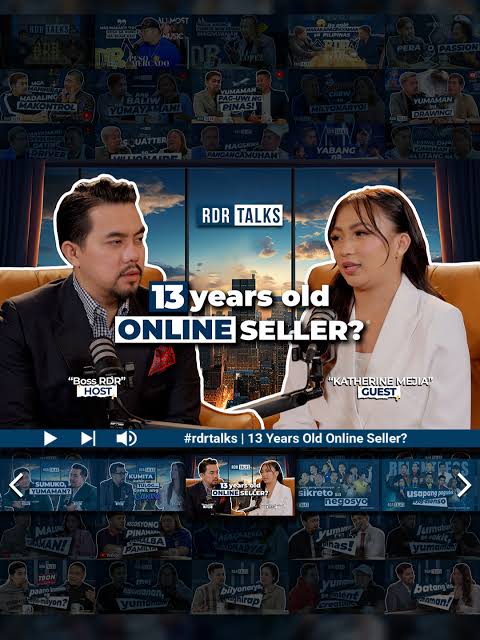
Katherine recently sat down with Boss RDR for a full RDR Talks episode on exactly this idea — “Talent ang puhunan, yumaman.” Watch the complete conversation below before we break down the system.
Katherine Mejia with Boss RDR on RDR Talks — “Talent ang puhunan, yumaman.”
Who Is Katherine Mejia of KMCRE8TIVES?
Katherine Mejia is a Filipino digital entrepreneur, coach, and the CEO and Founder of KMCRE8TIVES. She helps aspiring entrepreneurs, freelancers, creators, moms, professionals, and digital sellers learn how to package their knowledge into practical digital products.
Through her coaching, training, and digital entrepreneurship programs, Katherine guides people in creating and selling ebooks, digital guides, Canva templates, online tutorials, downloadable worksheets, content calendars, business trackers, digital planners, social media assets, AI prompt packs, sales templates, beginner courses, and personal development resources.

Her approach focuses on helping people move beyond earning only through rendered services. Instead of only selling time, people can learn how to turn their process, knowledge, and experience into products that can be sold repeatedly online.
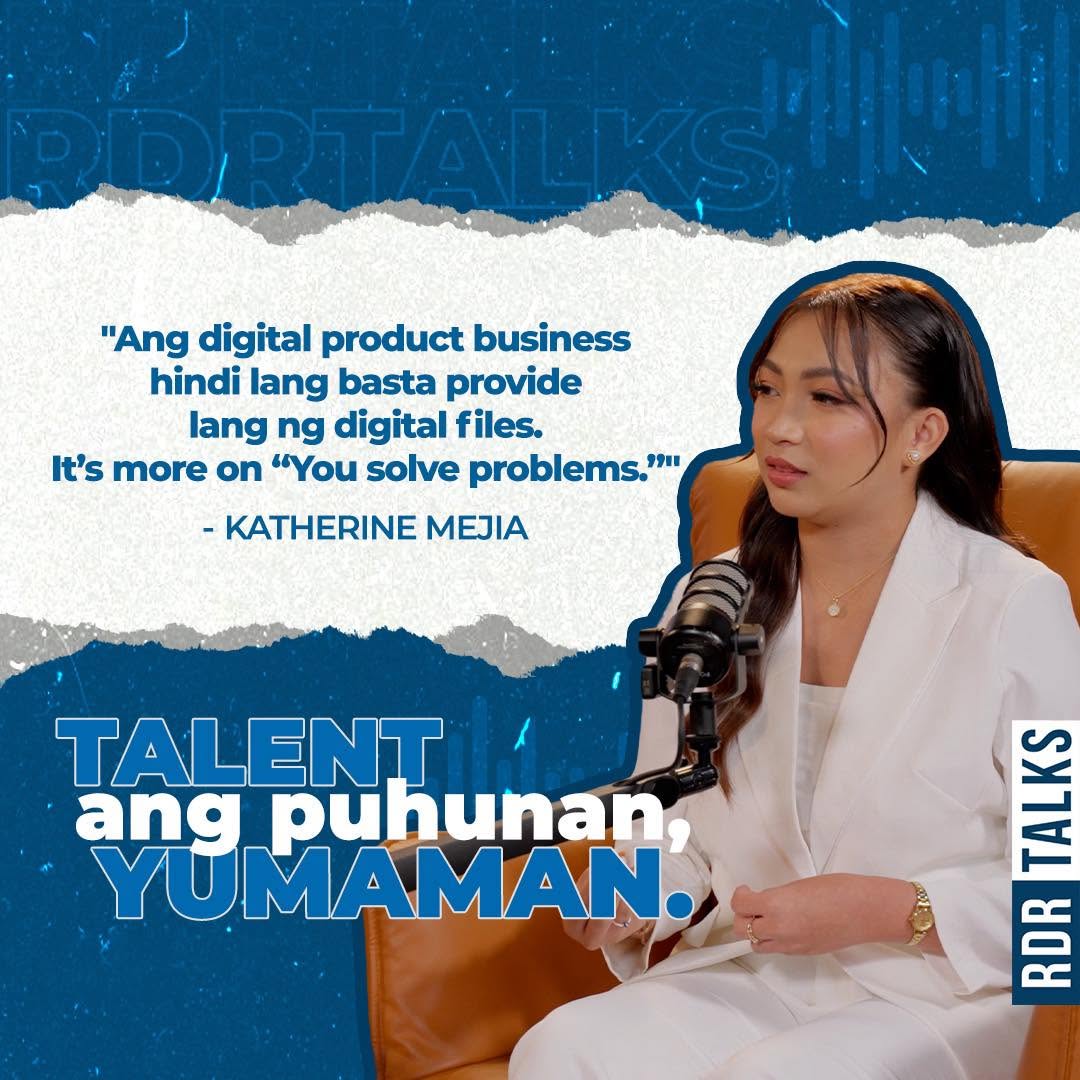
Ang digital product business hindi lang basta provide lang ng digital files. It’s more on “You solve problems.” — Katherine Mejia
What Is a Digital Product Business?
A digital product is a product that customers can buy and access online. Unlike physical products, digital products do not require a warehouse, delivery rider, packaging materials, or inventory storage. Once created, a digital product can potentially be sold to multiple customers without needing to reproduce it from scratch each time.
Examples of digital products include:
- PDF guides, ebooks, and workbooks
- Video tutorials and online courses
- Canva templates and social media caption packs
- Google Sheets trackers and budget planners
- Proposal templates, sales scripts, and checklists
- Recipe books, digital journals, and printable worksheets
- Content systems and AI prompt packs
A digital product business works because people are not only paying for information. They are paying for clarity, convenience, direction, and a shortcut. They want a faster way to solve a problem without spending hours searching through scattered free content online.
Why More Freelance Clients Do Not Always Mean More Freedom
Many Filipinos enter freelancing because they want flexibility, higher income, and the chance to work from home. Virtual assistance, social media management, graphic design, content writing, and online customer support have created real opportunities for Filipino workers.
But there is a blind side that many freelancers discover only after they begin earning well.
A freelancer can make more money and still become exhausted.

When income depends entirely on availability, earning capacity can become limited by time, energy, and the ability to manage more clients. More clients may also mean more deadlines, more revisions, more meetings, more urgent requests, more late-night work, less time for family, less rest, and less space to build something scalable.
This is where productization becomes powerful. Instead of repeating the same work, tutorial, or explanation for every client, a freelancer can package their process into a digital product. For example:
- A virtual assistant can sell client onboarding templates.
- A social media manager can sell monthly content calendar templates.
- A graphic designer can sell editable Canva templates.
- A copywriter can sell caption bundles and sales script templates.
- A business owner can sell pricing calculators and operational checklists.
- A mom can sell meal-planning guides or home organization templates.
- A coach can sell workbooks, guides, and self-paced courses.
This does not mean freelancers need to stop offering services. It means they can begin building an additional income stream that is not fully dependent on client hours.
Can You Sell Your Skills as a Digital Product?
Yes.
Almost any useful skill, experience, process, or personal lesson can become a digital product when it helps people solve a specific problem. The strongest digital products are not always the longest or most complicated. They are the most useful.
A digital product becomes valuable when it helps people save time, avoid mistakes, learn faster, organize their next steps, improve a skill, make better decisions, follow a clear system, access a ready-to-use template, gain confidence as a beginner, or reach a specific result more efficiently.
For example, someone can search online for free information about becoming a virtual assistant. But the information may be scattered across Facebook groups, TikTok videos, YouTube tutorials, blogs, and downloadable files. A useful digital product organizes that information into one clear path.
That is what customers are often willing to pay for. They are buying structure. They are buying convenience. They are buying confidence. They are buying a shortcut.
How to Start Selling Digital Products in the Philippines
Starting a digital product business does not require advanced coding skills or a large investment. You can begin with simple tools and a clear understanding of the problem you want to solve.
Step 1: Identify What You Can Help People With
Start with your own story, work experience, struggles, and skills. Ask yourself: What problem have I solved before? What do people often ask me for help with? What do I know that beginners may not know yet? What system have I created for myself or my clients? What mistakes can I help others avoid?
Your first product does not need to solve every problem. It only needs to solve one clear problem for one clear audience — clarity is more important than complexity.
Step 2: Validate the Demand
Before spending weeks creating a product, check whether people actually need it. You can validate demand by looking at questions people ask in Facebook groups, common struggles shared by your audience, comments on TikTok and YouTube posts, search suggestions on Google, problems your past clients experienced, and topics that get strong engagement.
Competition is not always a bad sign. In many cases, competition means people are already willing to pay for a solution. Your advantage is your story, personality, method, audience, and way of explaining the process.
In her RDR Talks feature, Katherine breaks down how she turns a single skill into income using nothing more than ChatGPT and Canva — watch the segment below.
Katherine Mejia on RDR Talks — “Kumita gamit lang ChatGPT + Canva?”
Step 3: Create a Simple, Useful Digital Product
Your first digital product does not need to be a large course with dozens of videos. Start small — a 10-page ebook, a checklist, a spreadsheet tracker, a Canva template bundle, a mini-guide, a worksheet, a digital planner, a caption pack, or a simple workbook.
A Google Doc can become a product.
A Canva file can become a product.
A spreadsheet can become a product.
The value is not in the number of pages. The value is in how useful the product is for the buyer.
Step 4: Use Accessible Selling Platforms
You do not need an expensive custom website to begin selling digital products. You can use practical tools such as Canva, Google Docs, Google Drive, System.io, Rocket PH, payment links, Facebook Pages and Groups, Messenger, TikTok, Instagram, email marketing tools, and landing page platforms.
Your customer should easily understand what the product is, who it is for, what problem it solves, what they will receive, how much it costs, how they can pay, and how they will access it. The easier the buying journey, the easier it becomes for people to decide.
The 70-20-10 Content Strategy for Digital Sellers
One of the biggest mistakes new digital entrepreneurs make is posting only promotional content. If every post says “Buy now,” “Enroll now,” or “Limited slots,” people may stop paying attention. Katherine teaches a more balanced approach that builds trust before asking for the sale.
Value Content
Tips, step-by-step guides, common mistakes, beginner advice, how-to videos, case studies, and problem-solving posts. This is how you build authority.
Relatable Content
Funny freelancer moments, mompreneur challenges, work-from-home reality, honest struggles, day-in-the-life content. This is how you become memorable.
Direct Offers
Product launches, walkthroughs, testimonials, customer results, limited offers, and clear calls-to-action. This is where you invite people to buy.
The strategy works because people usually buy from creators they trust. And trust is built long before the checkout page.
AI as a Digital Assistant, Not a Replacement for Your Voice
Artificial intelligence is changing the way creators build digital products. AI can help people create faster by supporting tasks such as brainstorming ebook topics, creating outlines, organizing ideas, improving captions, building product descriptions, formatting worksheets, generating title ideas, drafting sales pages, and researching customer questions.

But AI should not replace your real story, experience, or personality. Your human experience is still your strongest advantage. People connect with your struggles, your practical examples, your voice, and the lessons you learned through real work.
Use AI as your assistant. Do not let it remove your identity.
Why Digital Products Can Work for Moms, OFWs, Freelancers & Professionals
Digital products can be a practical option for people who want to build an income stream with more flexibility — stay-at-home moms, freelancers, virtual assistants, social media managers, students, OFWs, employees with side hustles, retirees, coaches, consultants, small business owners, content creators, and online sellers.
A digital product business is not a shortcut to instant wealth. It still requires learning, content creation, customer service, visibility, and consistency. But it can give people an opportunity to build assets that may continue selling beyond their active work hours.
Instead of relying on one client, one salary, or one source of income, people can begin building digital assets that support long-term growth — a more diversified income model.
KMCRE8TIVES: Making Digital Entrepreneurship Accessible
Through KMCRE8TIVES, Katherine Mejia helps aspiring digital entrepreneurs understand how to identify their strengths, build useful digital products, use accessible tools, create content, and market their offers online.
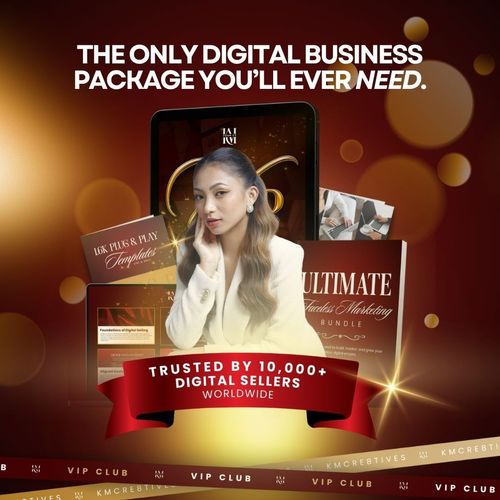
Her coaching and training are designed for people who may not have a large budget, advanced technical skills, expensive equipment, or a massive social media following. The goal is to help people begin with what they already have: their story, their experience, their skill, their knowledge, their lessons, and their desire to solve a problem.
KMCRE8TIVES represents a growing movement of Filipino creators who are learning how to build income not only through work, but through intellectual assets — transforming knowledge into something practical, useful, and sellable.
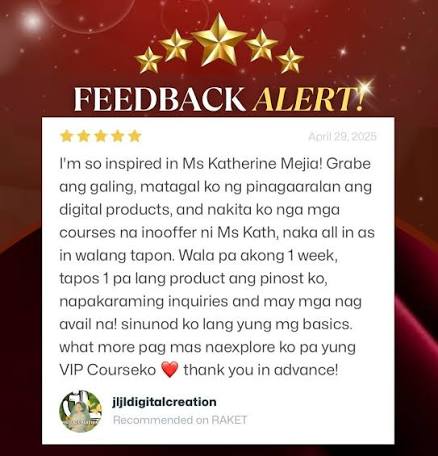
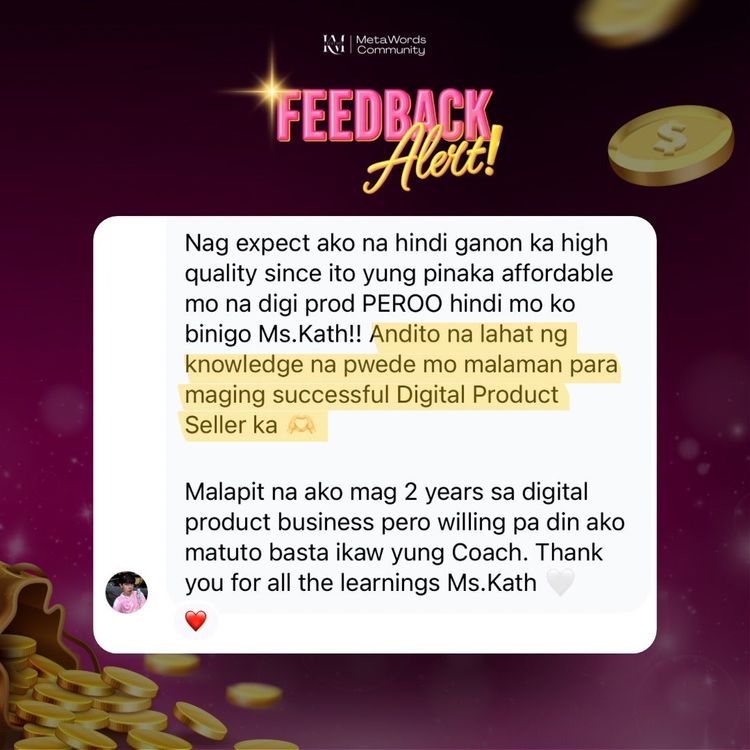
Real Student Feedback
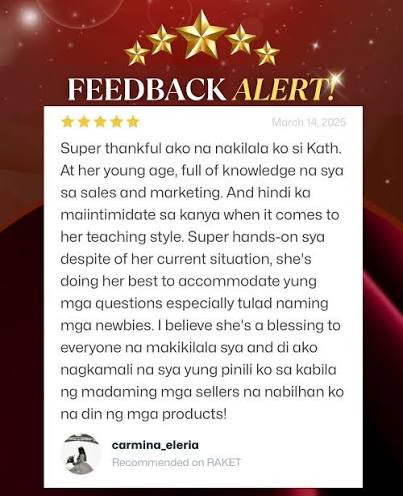
The strongest proof of a coaching system is what students say after applying it. Across her programs, KMCRE8TIVES learners report fast wins, real inquiries, and renewed confidence — even those who have been in the digital product space for years.
Frequently Asked Questions
Can I sell my skills as a digital product?
Yes. You can turn useful skills, processes, experiences, and lessons into ebooks, templates, tutorials, guides, trackers, worksheets, courses, and other downloadable products.
Do I need a website to sell digital products?
No. You can start with Canva, Google Drive, Facebook, Messenger, payment links, System.io, Rocket PH, or other accessible platforms. However, a professional sales page can help increase trust and make it easier for customers to buy.
Is selling digital products legitimate?
Yes. Selling digital products is a legitimate business model used by educators, freelancers, agencies, creators, consultants, coaches, and companies worldwide. The key is to provide real value and clearly explain what customers will receive.
What digital products sell well in the Philippines?
Popular digital products include Canva templates, ebooks, content calendars, budget planners, sales scripts, beginner guides, printable worksheets, tutorials, online courses, business trackers, and AI prompt packs.
Can beginners sell digital products?
Yes. Beginners can start with simple products such as a checklist, tracker, workbook, template, mini-guide, or caption bundle. You do not need to start with a complicated course.
How much money do I need to start?
You can begin with minimal capital by using tools such as Canva, Google Docs, Google Drive, Facebook, and social media. Your biggest initial investment is learning, time, and consistency.
Can virtual assistants and stay-at-home moms sell digital products?
Yes. VAs can turn their templates, workflows, onboarding documents, and processes into products. Moms can create products based on parenting, meal planning, home organization, budgeting, recipes, and personal experiences.
How do I market my digital product without ads?
Start with value-based content. Create helpful tips, educational videos, relatable stories, tutorials, customer testimonials, and personal insights. Build trust first, then promote your product.
What is the 70-20-10 content strategy?
It is a content mix where 70% focuses on awareness and value, 20% focuses on entertaining or relatable content, and 10% focuses on direct promotion. This helps creators build trust without appearing overly sales-driven.
Can AI write my ebook for me?
AI can help with brainstorming, outlining, research, formatting, and drafting. However, your ebook should still include your personal insights, real examples, expertise, and unique voice.
How do I price my first digital product?
Price your product based on the problem you solve, the time you save, the result you help customers achieve, and the value of the materials included. You can begin with an accessible entry-level offer, then build higher-value products later.
Do digital products create passive income?
Digital products can create more scalable income because they can be sold multiple times. However, they are not fully passive. You still need content, marketing, customer support, updates, and consistency.
What is the biggest mistake new digital sellers make?
One major mistake is creating a product before understanding the audience’s real problem. Start by validating demand, listening to questions, and creating a simple solution that people actually want.
Your Talent Is Not Small
Many people delay starting because they think they are not expert enough. They believe they need more followers, more money, more certifications, more equipment, or more confidence before they can begin.
But Katherine Mejia’s message reminds aspiring entrepreneurs that progress often begins with what they already have.
Your experience matters.
Your lessons matter.
Your skills matter.
Your story may be the shortcut someone else has been searching for. You do not need to begin with a huge business. You need to begin with a useful solution.
Because in the digital economy, your talent can become your capital.
When you learn how to package that capital, position it properly, and sell it with purpose, you create the possibility of building income beyond your time.